UI / UX Design
hierarchical project management platform (MVP)
A B2B platform designed to combat project complexity by providing role-based visibility and automatically cascading strategic goals into operational tasks.
Year :
2025
Industry :
Tech
Client :
Bharath Kumar
Project Duration :
5 weeks

Problem :
Traditional project management tools often fail when projects become complex, large-scale, or involve multiple independent teams. The core problem this MVP addresses is lack of visibility and ineffective delegation across different organizational layers.
Fragmented Oversight: Current tools offer flat task lists or complex, siloed dashboards, making it difficult for senior management to track overall portfolio health and for team leads to connect daily tasks to strategic goals.
Inefficient Delegation: The process of breaking a strategic objective down into operational tasks (the "hierarchical" need) is manual, leading to miscommunication and duplication of work.
Data Overload: Users are often overwhelmed by metrics that aren't relevant to their specific role, reducing efficiency and adoption.

Solution :
The solution is a Hierarchical Project Management Platform (MVP) designed to provide tailored visibility and control to every user, from the executive level down to the individual contributor.
Role-Based Dashboard: The UI is structured to display metrics relevant to the user's role: an executive sees high-level charts and project health scores, while a team member sees their personal task list and progress toward immediate milestones.
Multi-Level Task Structure: The platform enables managers to create projects that automatically cascade into sub-projects, phases, and individual tasks, ensuring clear lineage between the top-level goal and the bottom-level action.
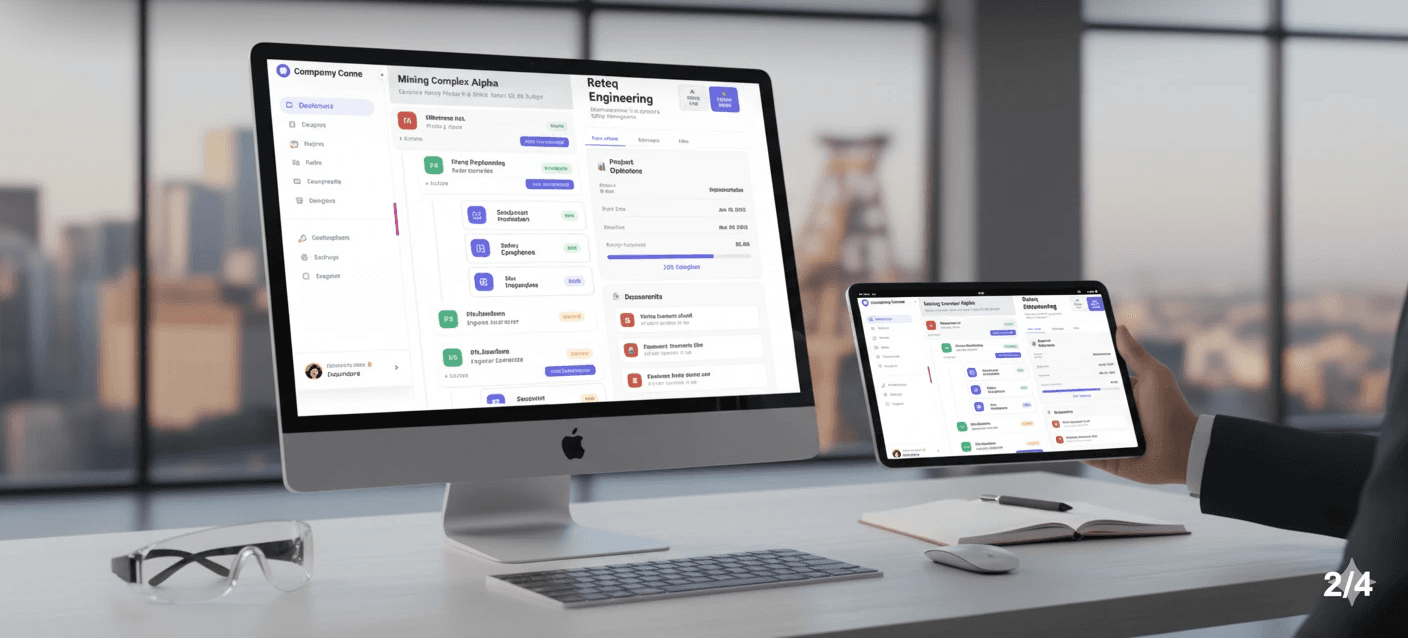
Data Clarity: The use of clean, visually intuitive data displays (charts, progress bars, and status tables, as shown in the screenshot) allows users to instantly grasp project status without having to synthesize complex reports.

Challenge :
OnThe primary challenge was designing a highly complex data structure—the "hierarchical" element—in a way that felt simple, intuitive, and efficient on a clean user interface.
Challenge: Visualizing Hierarchy: Presenting the multi-layered project structure (e.g., Portfolio > Program > Project > Task) without creating visual clutter or confusing navigation.
Solution: Implementing a consistent vertical navigation pattern (like the multi-level tree structure visible in the sidebar) and using clear visual components (cards, tags, and color-coding) to define the relationships between tasks and projects.
Challenge: Prioritizing MVP Features: Defining the minimum viable set of features (MVP) required to prove the core value proposition (the hierarchical flow) while balancing the client's desire for a fully featured enterprise tool.
Solution: Focus the initial design exclusively on creation, delegation, and progress tracking for the core hierarchical elements, deferring complex features like resource allocation or budgeting to later phases.
Summary :
This Hierarchical Project Management Platform MVP is a powerful demonstration of designing for enterprise complexity and user efficiency. The project successfully addresses the limitations of flat-structure tools by providing a role-based, multi-level system that improves organizational clarity and delegation. By focusing on a clean aesthetic and clear data visualization, the platform delivers a streamlined experience for managers and team members alike, proving the viability of a new approach to managing complex project portfolios.

More Projects


UI / UX Design
hierarchical project management platform (MVP)
A B2B platform designed to combat project complexity by providing role-based visibility and automatically cascading strategic goals into operational tasks.
Year :
2025
Industry :
Tech
Client :
Bharath Kumar
Project Duration :
5 weeks
Problem :
Traditional project management tools often fail when projects become complex, large-scale, or involve multiple independent teams. The core problem this MVP addresses is lack of visibility and ineffective delegation across different organizational layers.
Fragmented Oversight: Current tools offer flat task lists or complex, siloed dashboards, making it difficult for senior management to track overall portfolio health and for team leads to connect daily tasks to strategic goals.
Inefficient Delegation: The process of breaking a strategic objective down into operational tasks (the "hierarchical" need) is manual, leading to miscommunication and duplication of work.
Data Overload: Users are often overwhelmed by metrics that aren't relevant to their specific role, reducing efficiency and adoption.
Solution :
The solution is a Hierarchical Project Management Platform (MVP) designed to provide tailored visibility and control to every user, from the executive level down to the individual contributor.
Role-Based Dashboard: The UI is structured to display metrics relevant to the user's role: an executive sees high-level charts and project health scores, while a team member sees their personal task list and progress toward immediate milestones.
Multi-Level Task Structure: The platform enables managers to create projects that automatically cascade into sub-projects, phases, and individual tasks, ensuring clear lineage between the top-level goal and the bottom-level action.
Data Clarity: The use of clean, visually intuitive data displays (charts, progress bars, and status tables, as shown in the screenshot) allows users to instantly grasp project status without having to synthesize complex reports.
Challenge :
OnThe primary challenge was designing a highly complex data structure—the "hierarchical" element—in a way that felt simple, intuitive, and efficient on a clean user interface.
Challenge: Visualizing Hierarchy: Presenting the multi-layered project structure (e.g., Portfolio > Program > Project > Task) without creating visual clutter or confusing navigation.
Solution: Implementing a consistent vertical navigation pattern (like the multi-level tree structure visible in the sidebar) and using clear visual components (cards, tags, and color-coding) to define the relationships between tasks and projects.
Challenge: Prioritizing MVP Features: Defining the minimum viable set of features (MVP) required to prove the core value proposition (the hierarchical flow) while balancing the client's desire for a fully featured enterprise tool.
Solution: Focus the initial design exclusively on creation, delegation, and progress tracking for the core hierarchical elements, deferring complex features like resource allocation or budgeting to later phases.
Summary :
This Hierarchical Project Management Platform MVP is a powerful demonstration of designing for enterprise complexity and user efficiency. The project successfully addresses the limitations of flat-structure tools by providing a role-based, multi-level system that improves organizational clarity and delegation. By focusing on a clean aesthetic and clear data visualization, the platform delivers a streamlined experience for managers and team members alike, proving the viability of a new approach to managing complex project portfolios.
More Projects
UI / UX Design
hierarchical project management platform (MVP)
A B2B platform designed to combat project complexity by providing role-based visibility and automatically cascading strategic goals into operational tasks.
Year :
2025
Industry :
Tech
Client :
Bharath Kumar
Project Duration :
5 weeks
Problem :
Traditional project management tools often fail when projects become complex, large-scale, or involve multiple independent teams. The core problem this MVP addresses is lack of visibility and ineffective delegation across different organizational layers.
Fragmented Oversight: Current tools offer flat task lists or complex, siloed dashboards, making it difficult for senior management to track overall portfolio health and for team leads to connect daily tasks to strategic goals.
Inefficient Delegation: The process of breaking a strategic objective down into operational tasks (the "hierarchical" need) is manual, leading to miscommunication and duplication of work.
Data Overload: Users are often overwhelmed by metrics that aren't relevant to their specific role, reducing efficiency and adoption.
Solution :
The solution is a Hierarchical Project Management Platform (MVP) designed to provide tailored visibility and control to every user, from the executive level down to the individual contributor.
Role-Based Dashboard: The UI is structured to display metrics relevant to the user's role: an executive sees high-level charts and project health scores, while a team member sees their personal task list and progress toward immediate milestones.
Multi-Level Task Structure: The platform enables managers to create projects that automatically cascade into sub-projects, phases, and individual tasks, ensuring clear lineage between the top-level goal and the bottom-level action.
Data Clarity: The use of clean, visually intuitive data displays (charts, progress bars, and status tables, as shown in the screenshot) allows users to instantly grasp project status without having to synthesize complex reports.
Challenge :
OnThe primary challenge was designing a highly complex data structure—the "hierarchical" element—in a way that felt simple, intuitive, and efficient on a clean user interface.
Challenge: Visualizing Hierarchy: Presenting the multi-layered project structure (e.g., Portfolio > Program > Project > Task) without creating visual clutter or confusing navigation.
Solution: Implementing a consistent vertical navigation pattern (like the multi-level tree structure visible in the sidebar) and using clear visual components (cards, tags, and color-coding) to define the relationships between tasks and projects.
Challenge: Prioritizing MVP Features: Defining the minimum viable set of features (MVP) required to prove the core value proposition (the hierarchical flow) while balancing the client's desire for a fully featured enterprise tool.
Solution: Focus the initial design exclusively on creation, delegation, and progress tracking for the core hierarchical elements, deferring complex features like resource allocation or budgeting to later phases.
Summary :
This Hierarchical Project Management Platform MVP is a powerful demonstration of designing for enterprise complexity and user efficiency. The project successfully addresses the limitations of flat-structure tools by providing a role-based, multi-level system that improves organizational clarity and delegation. By focusing on a clean aesthetic and clear data visualization, the platform delivers a streamlined experience for managers and team members alike, proving the viability of a new approach to managing complex project portfolios.