Graphic Design
“AQI Control of West Zone Cities of India”
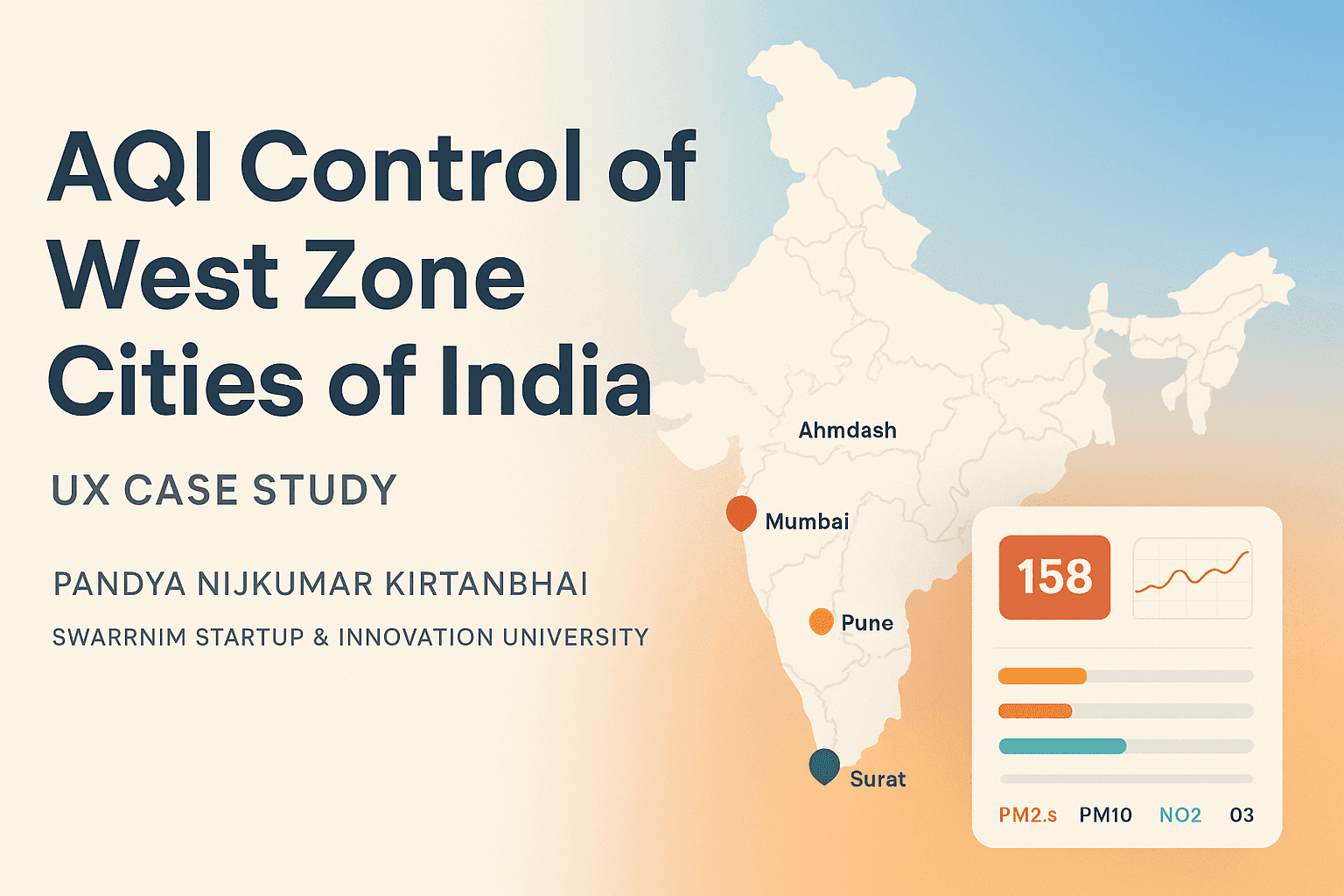
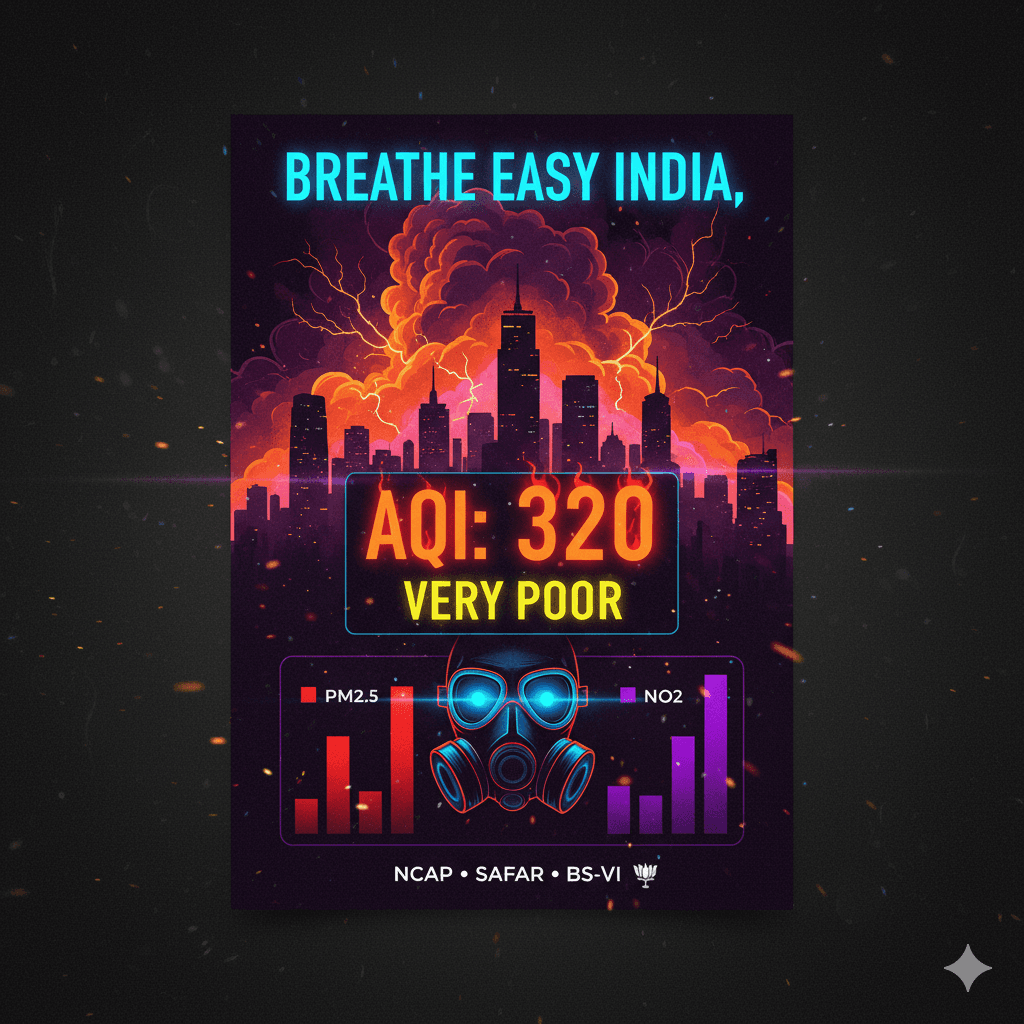
"AQI control of west zone cities" is a sleek and modern AQI Control presentation designed to showcase important properties and research with elegance and sophistication.
Year :
2025
Industry :
Environment
Client :
Neej Pandya
Project Duration :
2 Day
Problem :
Air pollution is a major worldwide concern due to its significant effects on economic growth, environmental sustainability, and human health. India, as a quickly developing country, faces a serious and worsening air pollution problem driven by rapid urbanization, industrial expansion, and rising vehicle emissions. Effective planning and management are essential to reduce these adverse effects.
However, national air quality initiatives have had varying effects across different regions, highlighting the need for specialized, regional strategies for long-term air quality improvement.

Solution :
The project's objective is to thoroughly evaluate and examine the current situation of the Air Quality Index (AQI) and its control systems in India's major West Zone cities. The ultimate goal is to pinpoint practical, data-driven approaches for long-term air quality management and public health enhancement.
The solution is implemented through a mixed-methods approach:
Analysis: Analyzing AQI trends from 2021 to 2024 to capture seasonal and annual variations in cities like Mumbai, Ahmedabad, and Pune.
Evaluation: Critically assessing the effectiveness of existing national and city-level policies (e.g., Bharat Stage Norms, Ujjwala Yojana, Ahmedabad's AIR Plan).
Recommendation: Formulating actionable proposals for enhancing AQI control, focusing on public health, monitoring infrastructure, and governance


Challenge :
Successfully managing air quality across the West Zone faces significant challenges:
Data and Monitoring Gaps: Many cities still lack dense sensor networks and long-term air quality data. There is a need for better source tracking through low-cost sensor networks and PM₂.₅ speciation.
Regional Variability: The selected cities (e.g., coastal Mumbai vs. arid Ahmedabad) differ significantly in geography, demographics, and pollutant profiles, requiring highly specialized strategies rather than one-size-fits-all policies.
Complex Health Linkages: More research is needed on the chronic low-level exposure and non-respiratory health effects (like neurological or pregnancy impacts) of pollution, as well as age- and gender-specific data, to formulate targeted policy.
Summary :
This presentation provides a first-of-its-kind multi-city AQ analysis for India’s West Zone, addressing a major data gap in regional air-quality science. The study thoroughly evaluates the regional variability of air pollution, identifies predominant pollutant sources (e.g., vehicular, industrial, stubble burning), and assesses the impact of policy interventions.
The final outcome is a comprehensive set of proposals focused on establishing citywide AQ sensor networks, implementing AI-based forecasting, and promoting policy integration across regions to effectively enhance air quality and significantly reduce the associated public health burden.
More Projects


Graphic Design
“AQI Control of West Zone Cities of India”
"AQI control of west zone cities" is a sleek and modern AQI Control presentation designed to showcase important properties and research with elegance and sophistication.
Year :
2025
Industry :
Environment
Client :
Neej Pandya
Project Duration :
2 Day
Problem :
Air pollution is a major worldwide concern due to its significant effects on economic growth, environmental sustainability, and human health. India, as a quickly developing country, faces a serious and worsening air pollution problem driven by rapid urbanization, industrial expansion, and rising vehicle emissions. Effective planning and management are essential to reduce these adverse effects.
However, national air quality initiatives have had varying effects across different regions, highlighting the need for specialized, regional strategies for long-term air quality improvement.
Solution :
The project's objective is to thoroughly evaluate and examine the current situation of the Air Quality Index (AQI) and its control systems in India's major West Zone cities. The ultimate goal is to pinpoint practical, data-driven approaches for long-term air quality management and public health enhancement.
The solution is implemented through a mixed-methods approach:
Analysis: Analyzing AQI trends from 2021 to 2024 to capture seasonal and annual variations in cities like Mumbai, Ahmedabad, and Pune.
Evaluation: Critically assessing the effectiveness of existing national and city-level policies (e.g., Bharat Stage Norms, Ujjwala Yojana, Ahmedabad's AIR Plan).
Recommendation: Formulating actionable proposals for enhancing AQI control, focusing on public health, monitoring infrastructure, and governance
Challenge :
Successfully managing air quality across the West Zone faces significant challenges:
Data and Monitoring Gaps: Many cities still lack dense sensor networks and long-term air quality data. There is a need for better source tracking through low-cost sensor networks and PM₂.₅ speciation.
Regional Variability: The selected cities (e.g., coastal Mumbai vs. arid Ahmedabad) differ significantly in geography, demographics, and pollutant profiles, requiring highly specialized strategies rather than one-size-fits-all policies.
Complex Health Linkages: More research is needed on the chronic low-level exposure and non-respiratory health effects (like neurological or pregnancy impacts) of pollution, as well as age- and gender-specific data, to formulate targeted policy.
Summary :
This presentation provides a first-of-its-kind multi-city AQ analysis for India’s West Zone, addressing a major data gap in regional air-quality science. The study thoroughly evaluates the regional variability of air pollution, identifies predominant pollutant sources (e.g., vehicular, industrial, stubble burning), and assesses the impact of policy interventions.
The final outcome is a comprehensive set of proposals focused on establishing citywide AQ sensor networks, implementing AI-based forecasting, and promoting policy integration across regions to effectively enhance air quality and significantly reduce the associated public health burden.
More Projects
Graphic Design
“AQI Control of West Zone Cities of India”
"AQI control of west zone cities" is a sleek and modern AQI Control presentation designed to showcase important properties and research with elegance and sophistication.
Year :
2025
Industry :
Environment
Client :
Neej Pandya
Project Duration :
2 Day
Problem :
Air pollution is a major worldwide concern due to its significant effects on economic growth, environmental sustainability, and human health. India, as a quickly developing country, faces a serious and worsening air pollution problem driven by rapid urbanization, industrial expansion, and rising vehicle emissions. Effective planning and management are essential to reduce these adverse effects.
However, national air quality initiatives have had varying effects across different regions, highlighting the need for specialized, regional strategies for long-term air quality improvement.
Solution :
The project's objective is to thoroughly evaluate and examine the current situation of the Air Quality Index (AQI) and its control systems in India's major West Zone cities. The ultimate goal is to pinpoint practical, data-driven approaches for long-term air quality management and public health enhancement.
The solution is implemented through a mixed-methods approach:
Analysis: Analyzing AQI trends from 2021 to 2024 to capture seasonal and annual variations in cities like Mumbai, Ahmedabad, and Pune.
Evaluation: Critically assessing the effectiveness of existing national and city-level policies (e.g., Bharat Stage Norms, Ujjwala Yojana, Ahmedabad's AIR Plan).
Recommendation: Formulating actionable proposals for enhancing AQI control, focusing on public health, monitoring infrastructure, and governance
Challenge :
Successfully managing air quality across the West Zone faces significant challenges:
Data and Monitoring Gaps: Many cities still lack dense sensor networks and long-term air quality data. There is a need for better source tracking through low-cost sensor networks and PM₂.₅ speciation.
Regional Variability: The selected cities (e.g., coastal Mumbai vs. arid Ahmedabad) differ significantly in geography, demographics, and pollutant profiles, requiring highly specialized strategies rather than one-size-fits-all policies.
Complex Health Linkages: More research is needed on the chronic low-level exposure and non-respiratory health effects (like neurological or pregnancy impacts) of pollution, as well as age- and gender-specific data, to formulate targeted policy.
Summary :
This presentation provides a first-of-its-kind multi-city AQ analysis for India’s West Zone, addressing a major data gap in regional air-quality science. The study thoroughly evaluates the regional variability of air pollution, identifies predominant pollutant sources (e.g., vehicular, industrial, stubble burning), and assesses the impact of policy interventions.
The final outcome is a comprehensive set of proposals focused on establishing citywide AQ sensor networks, implementing AI-based forecasting, and promoting policy integration across regions to effectively enhance air quality and significantly reduce the associated public health burden.